Timber Door Hardware Guide: Choosing Hinges, Handles & Locks That Last
Choosing the Right Hardware for a Timber Door
Hinges, handles, and locks that protect both function and finish for decades
A beautiful timber door can lose its charm quickly if the hardware holding it together is an afterthought. Hinges, handles, and locks take on daily wear that the door slab itself rarely experiences, and choosing the wrong hardware can lead to sagging, squeaking, or premature finish damage. This guide walks through every practical decision that keeps a timber door functioning smoothly and looking its best for decades.
Quick tip: Always match hardware weight capacity to your door's actual weight, not just its size. Solid timber doors are considerably heavier than engineered alternatives and need hinges rated accordingly.
Table of Contents
- Why Hardware Deserves Real Attention
- Understanding Your Door's Weight Before You Buy
- Choosing the Right Hinges
- Selecting Door Handles and Levers
- Locks and Security Hardware
- Choosing the Best Hardware Materials
- Matching Metal Finishes to Timber Tones
- Common Mistakes to Avoid
- Keeping Hardware Working Smoothly
- Frequently Asked Questions
- Final Thoughts
Why Hardware Deserves Real Attention
Hardware is the interface between a heavy, moving slab and a fixed frame. Every opening and closing cycle transfers stress through the hinges, and every lock engagement relies on precise alignment. Skimping here often shows up months later as dropped doors, worn strike plates, or handles that wobble loose.
Understanding Your Door's Weight Before You Buy
Before choosing any hardware, it helps to know roughly how much your door weighs. A standard hollow-core interior door might weigh 15-20kg, an engineered timber door around 30-40kg, while a solid hardwood entrance door can easily exceed 50-60kg. This single number determines almost every other hardware decision, from the number of hinges required to whether a standard latch or a heavier-duty multi-point lock is appropriate. Suppliers and joiners can usually confirm the weight rating of a specific door model on request.
| Door Type | Typical Weight | Hinge Recommendation |
|---|---|---|
| Hollow-core interior | 15–20kg | 2 standard butt hinges |
| Engineered timber | 30–40kg | 3 ball-bearing hinges |
| Solid hardwood entrance | 50–60kg+ | 3–4 ball-bearing or continuous hinges |
Choosing the Right Hinges
Each hinge type distributes a door's weight differently. The diagrams below show how the mechanism itself differs, not just the name.
Ball-Bearing Hinges
These are the standard choice for solid timber doors because the internal bearings reduce friction and support significant weight without sagging over time. They are especially worth the investment on frequently used entry doors.
Continuous Piano Hinges
Running the full height of the door, continuous hinges distribute weight evenly along the entire edge rather than at two or three points. They suit oversized or particularly heavy custom timber doors where standard hinges would concentrate too much stress in one spot.
Butt Hinges
The traditional choice for lighter interior doors, butt hinges are simple, affordable, and easy to install. They work well when a door's weight sits comfortably within their rated capacity, but they are not the best choice for heavy solid timber entrance doors.
Pivot Hinges
Mounted at the top and bottom of the door rather than the side, pivot hinges create a clean, hardware-free edge that suits minimalist and architectural designs. They require precise installation but can support substantial weight when specified correctly.
Selecting Door Handles and Levers
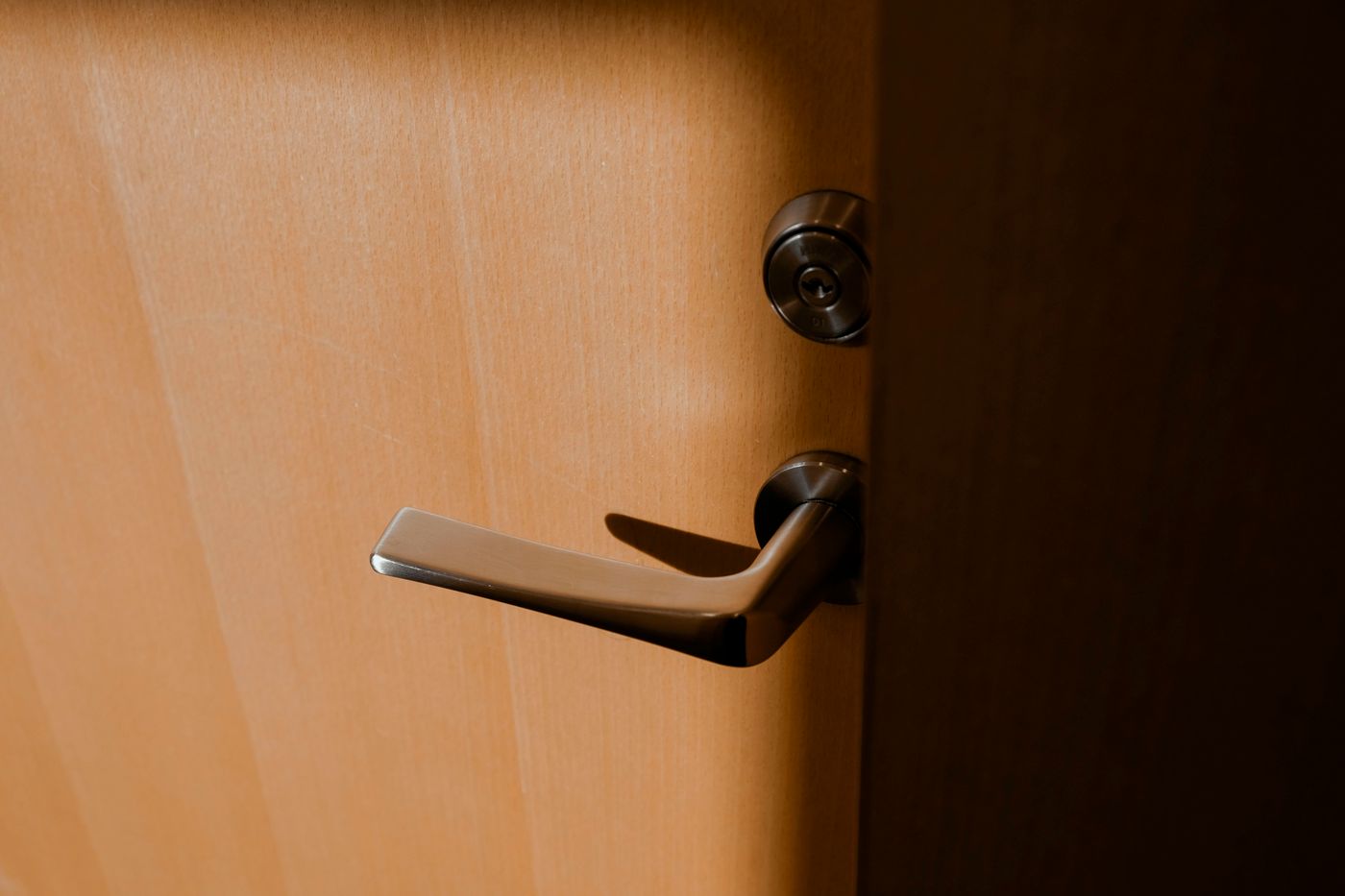
A handle should feel comfortable in daily use while complementing the door's overall design. Lever handles generally offer easier operation for households with children or elderly residents, while pull handles paired with a separate lock suit a more architectural, minimalist look. Whichever style is chosen, look for solid metal construction rather than hollow or plated designs, since these hold up far better against repeated use and years of handling.

A solid metal lever, rather than a hollow or plated one, holds up best to years of daily handling.
Locks and Security Hardware
Entry doors benefit from a multi-point locking system, which secures the door at several points along the frame rather than a single latch. This not only improves security but also helps keep a heavy timber door snug against its frame, reducing draughts and warping caused by uneven pressure. Interior doors, by contrast, usually only need a simple privacy or passage latch. Homeowners wanting extra convenience can also consider smart locks with keypad or app access, many of which are now available in finishes designed to match traditional hardware.
Choosing the Best Hardware Materials
Solid Brass
Durable, corrosion-resistant, and capable of developing an attractive patina over time. A popular choice for both traditional and premium contemporary doors.
Stainless Steel
Extremely strong and highly resistant to weather, making it a dependable option for exterior doors in coastal or humid climates.
Bronze
A heavier, premium option that ages gracefully and suits period or luxury properties looking for a rich, warm tone that deepens with age.
Zinc Alloy
A budget-friendly option suitable for lower-traffic interior doors, though generally less durable than brass, steel, or bronze under constant use.
Matching Metal Finishes to Timber Tones
Warm timber tones such as walnut or mahogany tend to pair well with matte black or aged bronze hardware, while lighter woods like oak or ash often look sharper alongside brushed nickel or satin chrome. Staying consistent with one finish throughout hinges, handles, and locks creates a more cohesive, considered appearance.
Common Mistakes to Avoid
- Choosing hardware by looks alone: A beautiful handle that isn't rated for the door's weight will fail early, regardless of how it looks.
- Mixing finishes inconsistently: Combining several different metal tones on one door often looks unplanned rather than intentional.
- Ignoring exterior exposure: Hardware on doors exposed to rain, salt air, or direct sun needs weather-appropriate materials and finishes.
- Skipping professional installation: Poorly aligned hinges or strike plates are one of the most common causes of sticking and sagging doors.
- Overlooking maintenance: Even premium hardware needs occasional care to keep functioning smoothly.
Keeping Hardware Working Smoothly
A small amount of routine care goes a long way. Hinges benefit from an occasional drop of lubricant to stay quiet and free-moving, while locks should be kept free of dust and grit that can interfere with the mechanism. Tightening loose screws promptly prevents the surrounding timber from wearing into an oversized, stripped hole that is much harder to fix later.
Frequently Asked Questions
How many hinges does a solid timber door need?
Most solid timber entrance doors use three hinges, though particularly heavy or oversized doors may require four to distribute the load more evenly.
Can I mix hardware finishes on the same door?
It's generally best to keep hinges, handles, and locks in the same finish family to maintain a cohesive, intentional look.
Do exterior timber doors need different hardware than interior doors?
Yes. Exterior doors need weather-resistant materials and stronger locking hardware, while interior doors can typically use lighter-duty options.
How often should door hardware be serviced?
A quick check every six months, with lubrication and screw-tightening as needed, is usually enough to keep hardware performing well for years.
Final Thoughts
Great timber doors are a partnership between the wood and the metal that supports it. Investing in properly rated hinges, comfortable handles, and dependable locks protects both the function and the appearance of the door for years to come, making it a small upfront cost that pays off in long-term durability.

Comments
Post a Comment